L'isolation thermique
Thermal insulation, R-values, insulation materials, external thermal insulation (ETI) and internal thermal insulation (ITI).


Summary for decision-makers
Roof moss removal eliminates moss, lichen, and algae that retain moisture and weaken slates, tiles, shingles, and joints. A clean roof reduces leaks, protects interior finishes, and contributes to better thermal insulation. Regular maintenance prevents costly and extensive renovations and improves the property's appeal on the real estate market.
Schedule the work in spring or autumn, after the rains, when temperatures are moderate, avoiding frost and heat waves. Also, address any visible vegetation, damp patches, clogged gutters, cracked tiles, or damaged joints. An annual inspection and moss removal every 3 to 5 years are often sufficient, or even every 1 to 2 years in damp or shady areas. Choose a professional, use approved, low-impact products, and keep your invoices.
The roof protects the house, and its condition directly impacts safety and maintenance costs. Often, the proliferation of moss, lichen, and algae is underestimated until structural damage or leaks appear. Neglecting moss removal can therefore lead to insurance claims and affect resale value. In this article, discover why you should remove moss from your roof and when to schedule it.
Roof moss removal eliminates vegetation that retains moisture and weakens roofing materials. When slates or shingles are covered in moss, their lifespan is reduced. The joints also deteriorate more quickly. Preventative action saves you money. Regular maintenance prevents costly and extensive renovations.
Furthermore, a clean roof contributes to better thermal insulation . It also reduces the risk of leaks that can damage interior finishes. Aesthetically, a property is more attractive on the real estate market when the roof is clear.
For all these reasons, it's important to prune nearby branches to improve sunlight penetration. As a preventative measure, apply approved water-repellent products . Also, conduct inspections after storms to check flashing and other critical points.
Moss removal is carried out at specific times or when certain signs appear in the dwelling.
Ideally, moss removal should be carried out in spring or autumn after rainy periods and when temperatures are moderate. These periods are recommended because they allow surfaces to dry naturally. They also slow down the rapid regrowth of vegetation. Above all, avoid periods of frost or extreme heat. These conditions reduce the effectiveness of treatments and compromise operator safety.
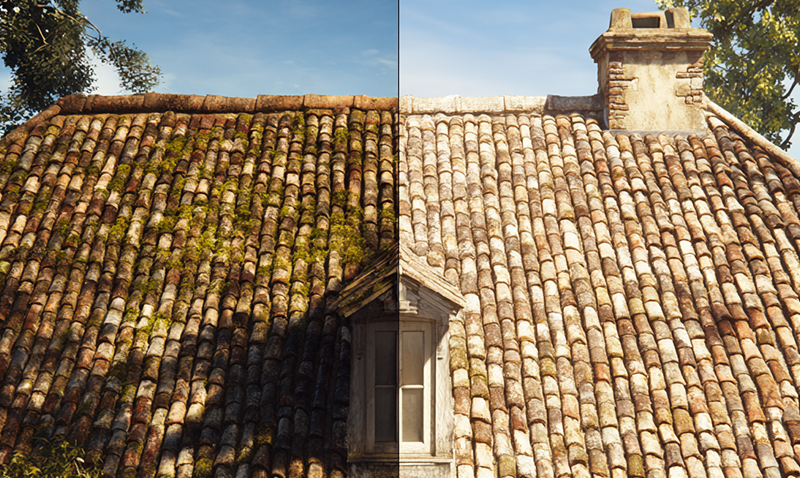
Moss removal is also recommended when the following signs are observed.
Roof moss removal can be done manually ( brushing ) or chemically ( using approved treatments) , followed by a controlled rinse . For most roofs , an annual inspection and moss removal every 3 to 5 years are sufficient. However, in very humid or shaded areas, an interval of 1 to 2 years is ideal.
It is recommended to entrust the operation to a qualified professional, equipped to work at heights and compliant with product regulations . Costs depend on access, surface area, and the complexity of the project.
Choose products with a low environmental impact and keep your receipts. Your insurer may require proof of maintenance in the event of a claim. If you enjoy DIY projects, be aware that while cleaning is possible, product safety and compliance are paramount.
To protect the integrity of your building, moss removal is a mandatory preventative measure. You should therefore schedule treatments according to the climate and the apparent condition of the roof. However, regular maintenance allows you to save money in the long run and preserve the market value of your property.
Moss removal eliminates vegetation that retains moisture and weakens materials. It prevents structural damage, improves insulation, and reduces the risk of water infiltration.
Moss removal should be carried out in spring or autumn, or whenever moss, damp patches, or tile deterioration are visible. In damp or shaded areas, the recommended interval is 1 to 2 years.
It is advisable to use a qualified professional who uses approved, low-environmental-impact products. Keep your maintenance invoices to meet your insurer's requirements.
A process for removing moss, lichen or algae from the roof in order to preserve the materials and prevent moisture.
Certified chemical product used to protect the roof from water and slow the regrowth of vegetation.
Checking the condition of the roof and sensitive points after bad weather to prevent leaks and damage.
2 Avenue du Souleilla
31320 Vigoulet-Auzil
France


